Novel high-dense microelectrode array based multimodal bioelectronic monitoring system for cardiac arrhythmia re-entry analysis
Novel high-dense microelectrode array based multimodal bioelectronic monitoring system for cardiac arrhythmia re-entry analysis
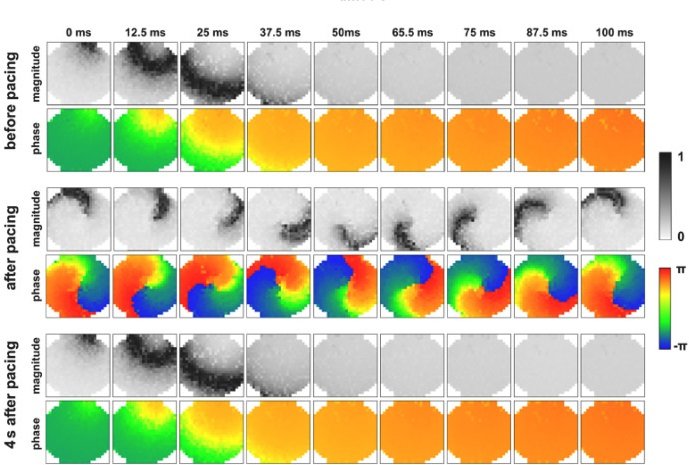
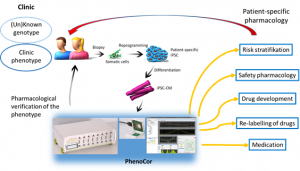
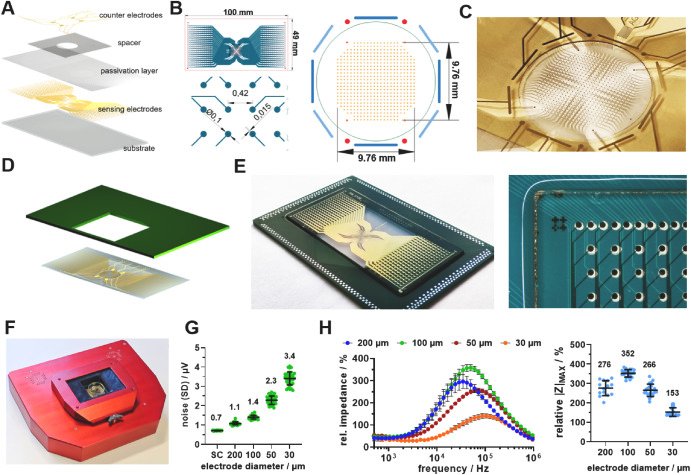
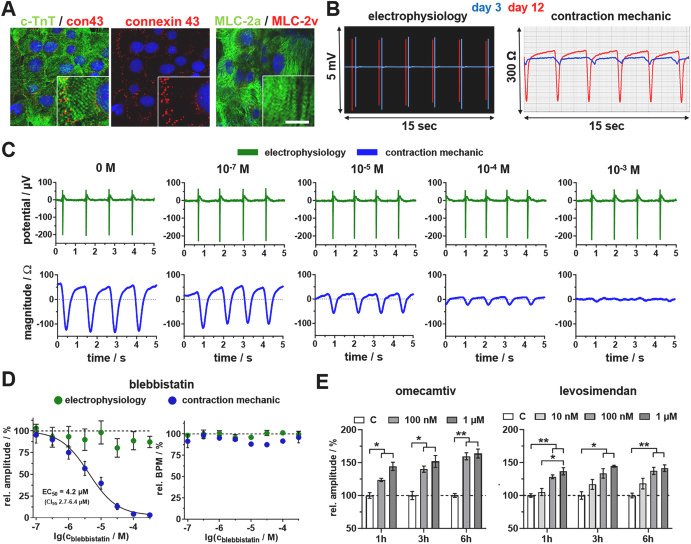
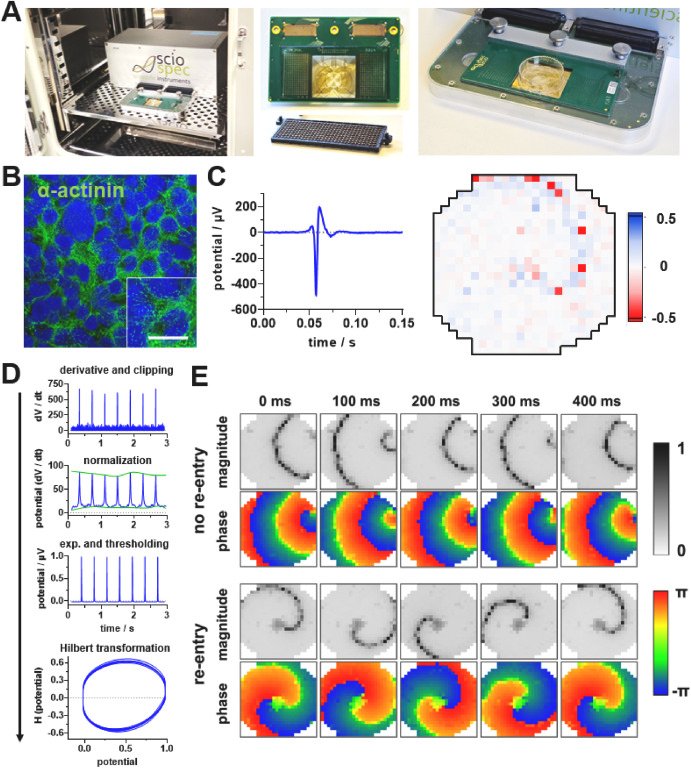
In recent decades, significant progress has been made in the treatment of heart diseases, particularly in the field of personalized medicine. Despite the development of genetic tests, phenotyping and risk stratification are performed based on clinical findings and invasive in vivo techniques, such as stimulation conduction mapping techniques and programmed ventricular pacing. Consequently, label-free non-invasive in vitro functional analysis systems are urgently needed for more accurate and effective in vitro risk stratification, model-based therapy planning, and clinical safety profile evaluation of drugs. To overcome these limitations, a novel multilayer high-density microelectrode array (HD-MEA), with an optimized configuration of 512 sensing and 4 pacing electrodes on a sensor area of 100 mm2, was developed for the bioelectronic detection of re-entry arrhythmia patterns. Together with a co-developed front-end, we monitored label-free and in parallel cardiac electrophysiology based on field potential monitoring and mechanical contraction using impedance spectroscopy at the same microelectrode. In proof of principle experiments, human induced pluripotent stem cell (hiPS)-derived cardiomyocytes were cultured on HD-MEAs and used to demonstrate the sensitive quantification of contraction strength modulation by cardioactive drugs such as blebbistatin (IC50 = 4.2 μM), omecamtiv and levosimendan. Strikingly, arrhythmia-typical rotor patterns (re-entry) can be induced by optimized electrical stimulation sequences and detected with high spatial resolution. Therefore, we provide a novel cardiac re-entry analysis system as a promising reference point for diagnostic approaches based on in vitro assays using patient-specific hiPS-derived cardiomyocytes.

Image Galery

Find out more about PhenoCor and CardioEpiX

Curious about our latest developments?
Check out our latest developments and products.

Get in touch with us

+49 3425 88399 00

info@sciospec.de

Sciospec Scientific Instruments GmbH
Leipziger Str. 43b, 04828 Bennewitz, Germany

    Novel high-dense microelectrode array based multimodal bioelectronic monitoring system for cardiac arrhythmia re-entry analysis
    Novel high-dense microelectrode array based multimodal bioelectronic monitoring system for cardiac arrhythmia re-entry analysis
    In recent decades, significant progress has been made in the treatment of heart diseases, particularly in the field of personalized medicine. Despite the development of genetic tests, phenotyping and risk stratification are performed based on clinical findings and invasive in vivo techniques, such as stimulation conduction mapping techniques and programmed ventricular pacing. Consequently, label-free non-invasive in vitro functional analysis systems are urgently needed for more accurate and effective in vitro risk stratification, model-based therapy planning, and clinical safety profile evaluation of drugs. To overcome these limitations, a novel multilayer high-density microelectrode array (HD-MEA), with an optimized configuration of 512 sensing and 4 pacing electrodes on a sensor area of 100 mm2, was developed for the bioelectronic detection of re-entry arrhythmia patterns. Together with a co-developed front-end, we monitored label-free and in parallel cardiac electrophysiology based on field potential monitoring and mechanical contraction using impedance spectroscopy at the same microelectrode. In proof of principle experiments, human induced pluripotent stem cell (hiPS)-derived cardiomyocytes were cultured on HD-MEAs and used to demonstrate the sensitive quantification of contraction strength modulation by cardioactive drugs such as blebbistatin (IC50 = 4.2 μM), omecamtiv and levosimendan. Strikingly, arrhythmia-typical rotor patterns (re-entry) can be induced by optimized electrical stimulation sequences and detected with high spatial resolution. Therefore, we provide a novel cardiac re-entry analysis system as a promising reference point for diagnostic approaches based on in vitro assays using patient-specific hiPS-derived cardiomyocytes.

    Image Galery

    Find out more about PhenoCor and CardioEpiX

    Curious about our latest developments?
    Check out our latest developments and products.

    Get in touch with us

    +49 3425 88399 00

    info@sciospec.de

    Sciospec Scientific Instruments GmbH
    Leipziger Str. 43b, 04828 Bennewitz, Germany

      Novel high-dense microelectrode array based multimodal bioelectronic monitoring system for cardiac arrhythmia re-entry analysis
      Novel high-dense microelectrode array based multimodal bioelectronic monitoring system for cardiac arrhythmia re-entry analysis
      In recent decades, significant progress has been made in the treatment of heart diseases, particularly in the field of personalized medicine. Despite the development of genetic tests, phenotyping and risk stratification are performed based on clinical findings and invasive in vivo techniques, such as stimulation conduction mapping techniques and programmed ventricular pacing. Consequently, label-free non-invasive in vitro functional analysis systems are urgently needed for more accurate and effective in vitro risk stratification, model-based therapy planning, and clinical safety profile evaluation of drugs. To overcome these limitations, a novel multilayer high-density microelectrode array (HD-MEA), with an optimized configuration of 512 sensing and 4 pacing electrodes on a sensor area of 100 mm2, was developed for the bioelectronic detection of re-entry arrhythmia patterns. Together with a co-developed front-end, we monitored label-free and in parallel cardiac electrophysiology based on field potential monitoring and mechanical contraction using impedance spectroscopy at the same microelectrode. In proof of principle experiments, human induced pluripotent stem cell (hiPS)-derived cardiomyocytes were cultured on HD-MEAs and used to demonstrate the sensitive quantification of contraction strength modulation by cardioactive drugs such as blebbistatin (IC50 = 4.2 μM), omecamtiv and levosimendan. Strikingly, arrhythmia-typical rotor patterns (re-entry) can be induced by optimized electrical stimulation sequences and detected with high spatial resolution. Therefore, we provide a novel cardiac re-entry analysis system as a promising reference point for diagnostic approaches based on in vitro assays using patient-specific hiPS-derived cardiomyocytes.

      Image Galery

      Find out more about PhenoCor and CardioEpiX

      Curious about our latest developments?
      Check out our latest developments and products.

      Get in touch with us

      +49 3425 88399 00

      info@sciospec.de

      Sciospec Scientific Instruments GmbH
      Leipziger Str. 43b, 04828 Bennewitz, Germany

        Novel high-dense microelectrode array based multimodal bioelectronic monitoring system for cardiac arrhythmia re-entry analysis
        Novel high-dense microelectrode array based multimodal bioelectronic monitoring system for cardiac arrhythmia re-entry analysis
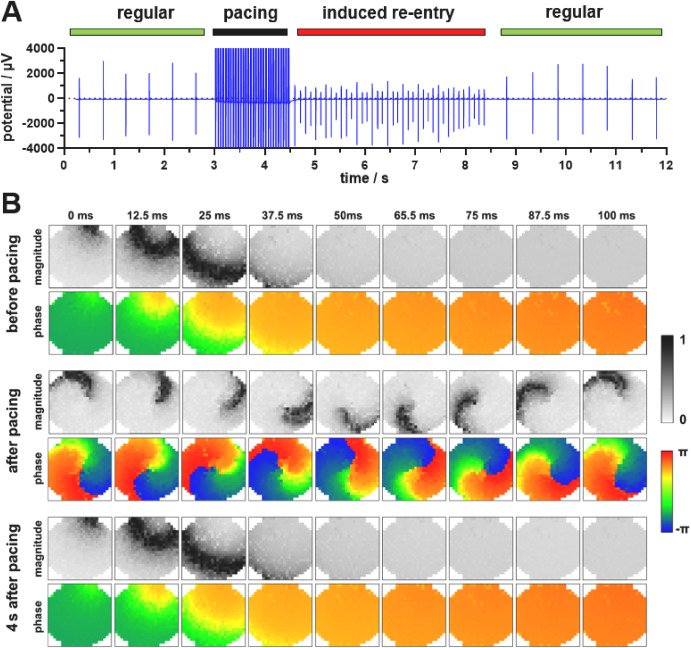
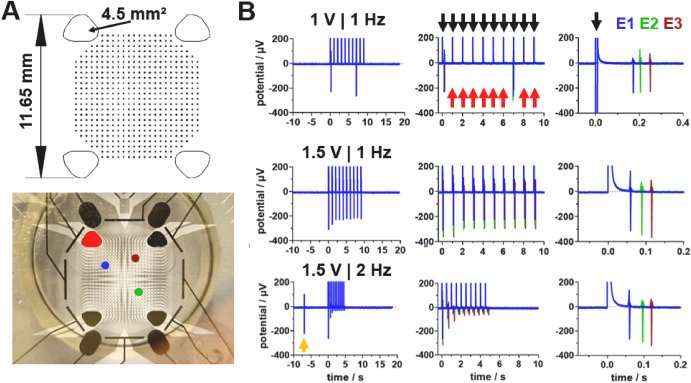
        In recent decades, significant progress has been made in the treatment of heart diseases, particularly in the field of personalized medicine. Despite the development of genetic tests, phenotyping and risk stratification are performed based on clinical findings and invasive in vivo techniques, such as stimulation conduction mapping techniques and programmed ventricular pacing. Consequently, label-free non-invasive in vitro functional analysis systems are urgently needed for more accurate and effective in vitro risk stratification, model-based therapy planning, and clinical safety profile evaluation of drugs. To overcome these limitations, a novel multilayer high-density microelectrode array (HD-MEA), with an optimized configuration of 512 sensing and 4 pacing electrodes on a sensor area of 100 mm2, was developed for the bioelectronic detection of re-entry arrhythmia patterns. Together with a co-developed front-end, we monitored label-free and in parallel cardiac electrophysiology based on field potential monitoring and mechanical contraction using impedance spectroscopy at the same microelectrode. In proof of principle experiments, human induced pluripotent stem cell (hiPS)-derived cardiomyocytes were cultured on HD-MEAs and used to demonstrate the sensitive quantification of contraction strength modulation by cardioactive drugs such as blebbistatin (IC50 = 4.2 μM), omecamtiv and levosimendan. Strikingly, arrhythmia-typical rotor patterns (re-entry) can be induced by optimized electrical stimulation sequences and detected with high spatial resolution. Therefore, we provide a novel cardiac re-entry analysis system as a promising reference point for diagnostic approaches based on in vitro assays using patient-specific hiPS-derived cardiomyocytes.

        Image Galery

        Find out more about PhenoCor and CardioEpiX

        Curious about our latest developments?
        Check out our latest developments and products.

        Get in touch with us

        +49 3425 88399 00

        info@sciospec.de

        Sciospec Scientific Instruments GmbH
        Leipziger Str. 43b, 04828 Bennewitz, Germany

          Novel high-dense microelectrode array based multimodal bioelectronic monitoring system for cardiac arrhythmia re-entry analysis

          Novel high-dense microelectrode array based multimodal bioelectronic monitoring system for cardiac arrhythmia re-entry analysis

          In recent decades, significant progress has been made in the treatment of heart diseases, particularly in the field of personalized medicine. Despite the development of genetic tests, phenotyping and risk stratification are performed based on clinical findings and invasive in vivo techniques, such as stimulation conduction mapping techniques and programmed ventricular pacing. Consequently, label-free non-invasive in vitro functional analysis systems are urgently needed for more accurate and effective in vitro risk stratification, model-based therapy planning, and clinical safety profile evaluation of drugs. To overcome these limitations, a novel multilayer high-density microelectrode array (HD-MEA), with an optimized configuration of 512 sensing and 4 pacing electrodes on a sensor area of 100 mm2, was developed for the bioelectronic detection of re-entry arrhythmia patterns. Together with a co-developed front-end, we monitored label-free and in parallel cardiac electrophysiology based on field potential monitoring and mechanical contraction using impedance spectroscopy at the same microelectrode. In proof of principle experiments, human induced pluripotent stem cell (hiPS)-derived cardiomyocytes were cultured on HD-MEAs and used to demonstrate the sensitive quantification of contraction strength modulation by cardioactive drugs such as blebbistatin (IC50 = 4.2 μM), omecamtiv and levosimendan. Strikingly, arrhythmia-typical rotor patterns (re-entry) can be induced by optimized electrical stimulation sequences and detected with high spatial resolution. Therefore, we provide a novel cardiac re-entry analysis system as a promising reference point for diagnostic approaches based on in vitro assays using patient-specific hiPS-derived cardiomyocytes.

          Image Galery

          Find out more about PhenoCor and CardioEpiX

          Curious about our latest developments?
          Check out our latest developments and products.

          Get in touch with us

          +49 3425 88399 00

          info@sciospec.de

          Sciospec Scientific Instruments GmbH
          Leipziger Str. 43b, 04828 Bennewitz, Germany

            Get in touch with us

            Search

            Get in touch with us